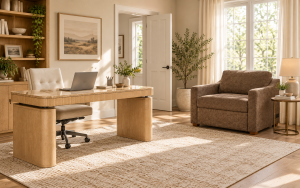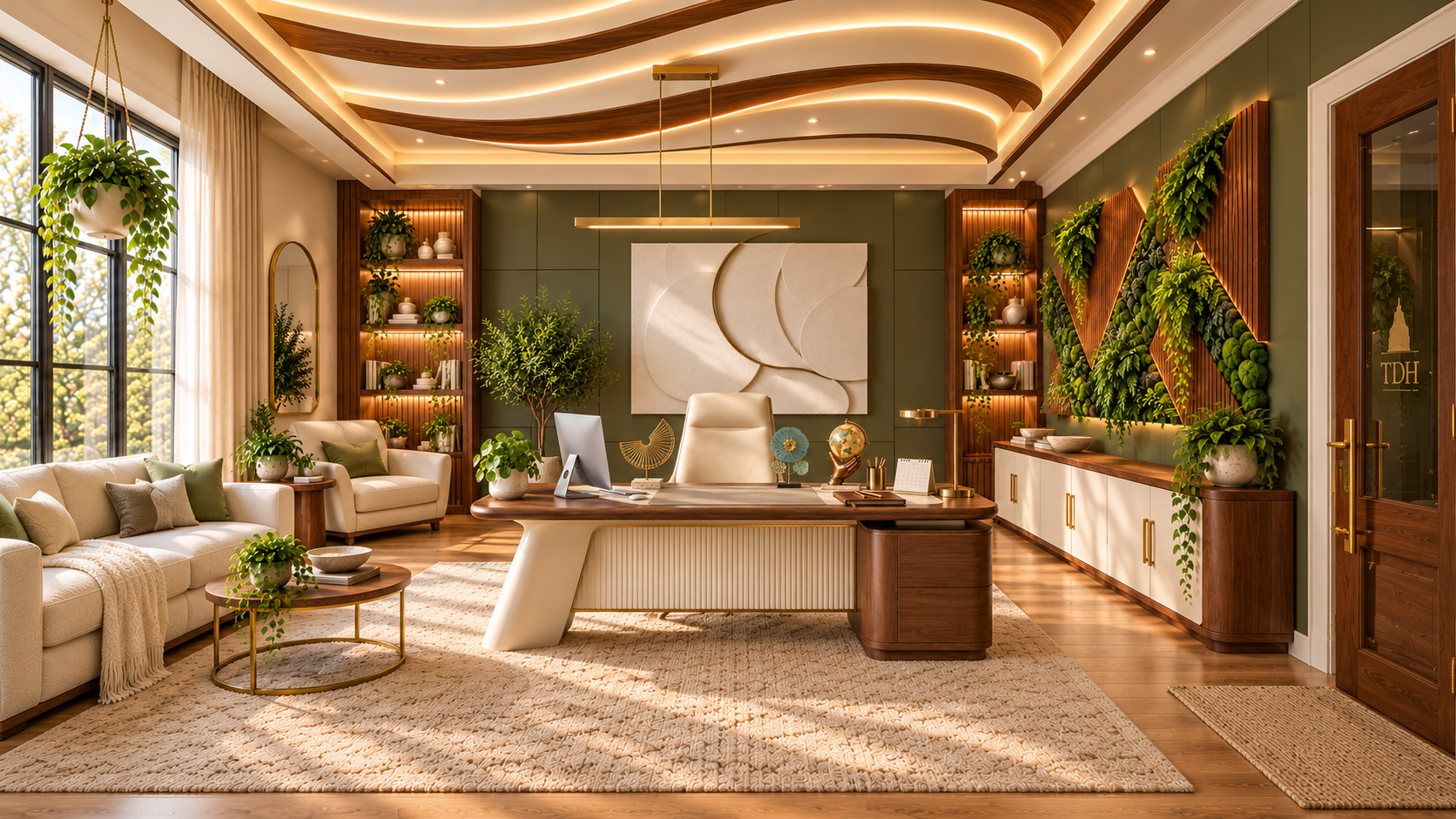
A beautifully decorated home office begins with furniture that makes everyday work easier. A well-proportioned desk gives you room to think, a comfortable chair supports your working routine, and thoughtfully arranged storage keeps the room from becoming overwhelmed by paperwork and equipment.
The decorative details bring those practical pieces together. Warm wood, soft upholstery, textured artwork and carefully placed lighting can make a workspace feel as welcoming as the rest of your home.
Welcome to The Decor Hours – The office featured here combines walnut, cream, olive green and warm metallic accents. Each image explores a different part of that room, showing how individual choices contribute to a coordinated space. You can recreate the overall direction or borrow a few details for a smaller office.
1. Choose a Desk That Sets the Style of the Room
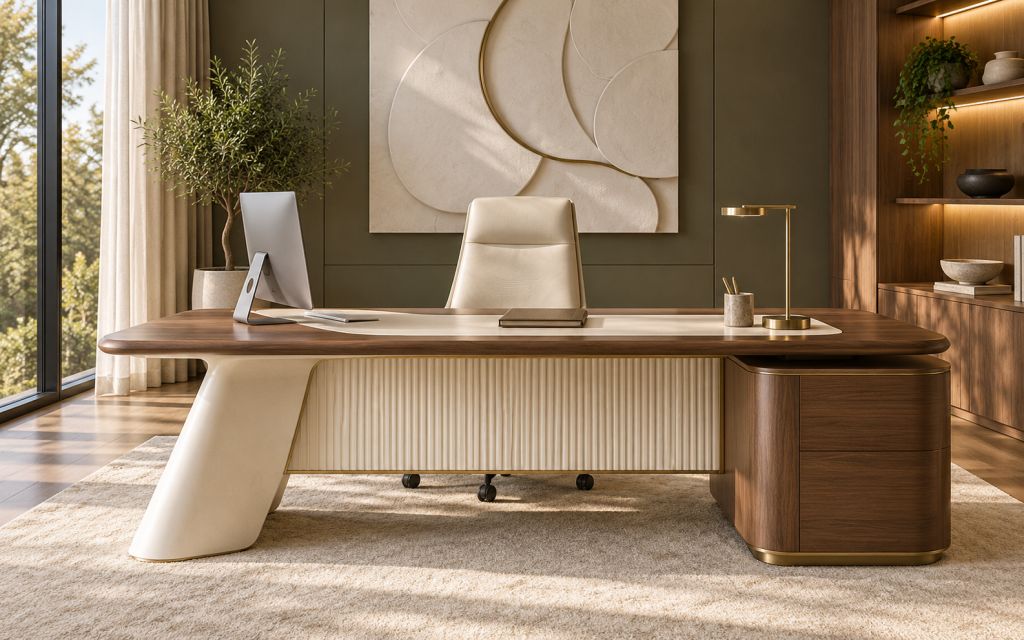
The walnut-and-cream desk gives this office its main focal point. Its curved desktop softens the furniture’s substantial size, while the fluted cream front introduces texture without adding another color. A rounded storage pedestal completes the design and provides a practical place for everyday supplies.
A desk like this works particularly well where its front remains visible from the doorway. Position it with enough clearance to move the chair, open drawers and walk around the working area. Side lighting from a window can be useful, but check the screen for reflections before settling on the final position.
Choose the desk around your equipment first. Consider the space needed for a monitor, keyboard, notebook and lamp, as well as comfortable legroom underneath.
Alternative ways to create the look:
- Pale oak and ivory: A lighter combination that works well with cream curtains and neutral upholstery.
- Walnut and charcoal: A stronger contrast for a more dramatic office.
- An adjustable desk: A practical alternative when you want to change working positions.
- A compact writing desk: Suitable for a smaller room and potentially useful later as a dressing table or console, depending on its dimensions.
Shopping idea: Explore HULALA HOME’s home office furniture for desk alternatives. Compare measurements, storage and assembly requirements rather than expecting an exact match to the illustrated design.
2. Decorate the Desktop Without Losing Working Space
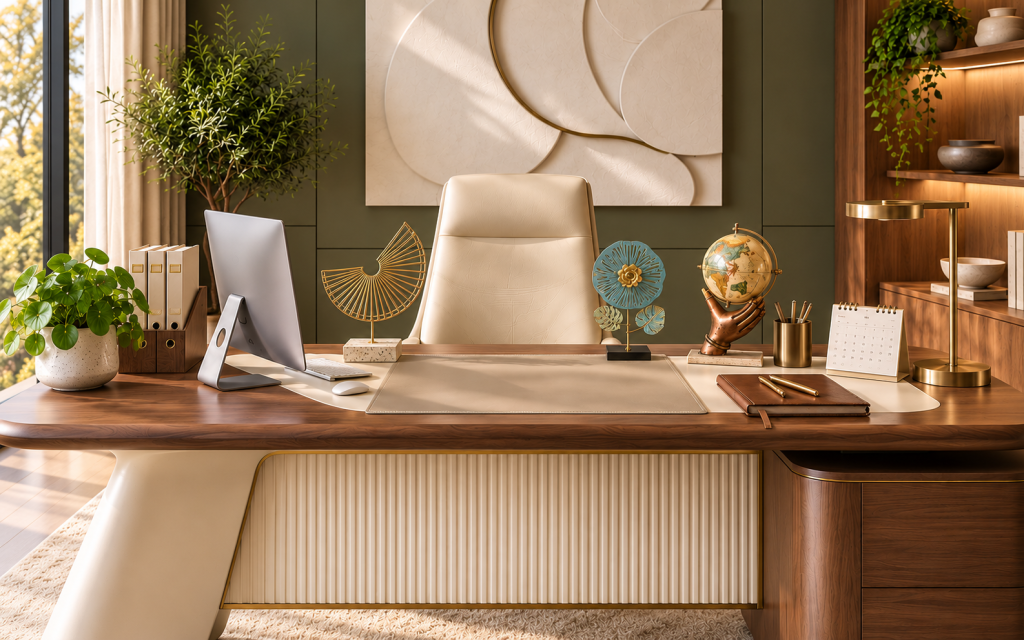
The closer view shows how accessories can connect a desk to the rest of the room. A neutral mat softens the walnut surface, while the brass lamp and decorative objects repeat the warm metallic accents used elsewhere.
The important detail is balance. A desk can look attractive without displaying every accessory you own. Keep the center available for actual work and group smaller items near the back or one side.
Create a working area for the keyboard and notebook, a convenient spot for frequently used tools, and a small decorative grouping. One globe, photograph or sculptural object is often enough to add personality. Use a shallow tray to keep small objects together instead of scattering them across the surface.
Alternative ways to create the look:
- Cream and brass: Pair a neutral mat with a metal pen cup and one pale ceramic accessory.
- Natural textures: Combine a cork mat, wooden organizer and small plant.
- Personalized accessories: Use a custom mouse pad and a framed photograph.
- A restrained arrangement: Keep only a lamp, organizer and notebook on a smaller desk.
Shopping idea: Giftlab’s customizable mouse pad with wireless charging offers a personalized alternative to a plain mat. Check the dimensions and device compatibility.
3. Give Your Monitor a Dedicated Stand
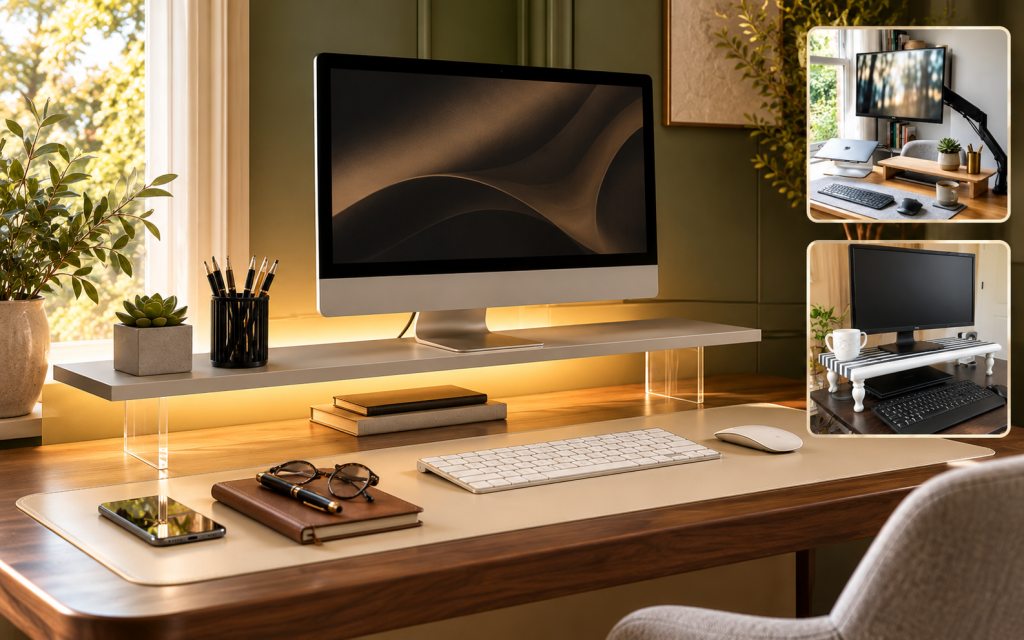
The transparent monitor riser keeps the desktop visually light and allows the walnut finish to remain visible. It also creates a small space underneath for neatly stored accessories.
Choose a monitor stand according to your equipment and seated position. A fixed riser adds height, while an adjustable arm offers more flexibility. Neither should be selected purely because it looks attractive in a styled photograph.
Keep the keyboard and mouse comfortably positioned, and avoid filling the space beneath the monitor with loose paperwork. If you choose an arm, check the monitor’s mounting compatibility, weight and the desk’s construction before ordering.
Alternative ways to create the look:
- A transparent riser: A visually subtle choice for a decorative desktop.
- A wooden stand: Walnut repeats the desk finish; pale oak adds contrast.
- An adjustable monitor arm: Useful for freeing surface space and changing screen position.
- A laptop stand: Pair it with a separate keyboard and mouse when that suits your working setup.
Shopping idea: Browse Sunaofe’s workspace products for monitor-arm alternatives. The clear riser in the image is not an identified Sunaofe product.
4. Select a Chair That Combines Comfort and Style
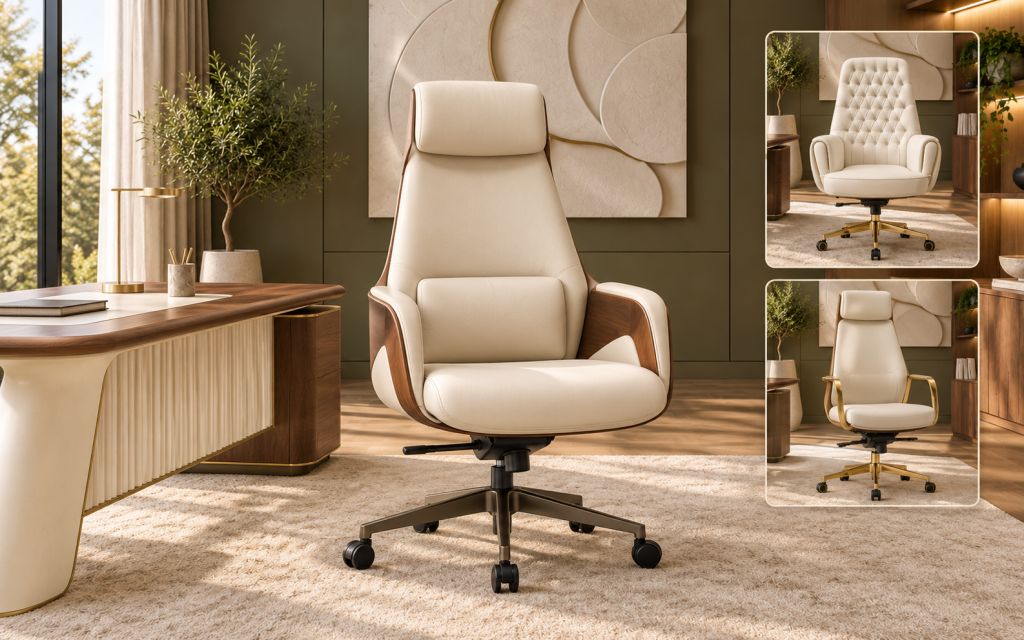
The cream upholstered chair connects the working area to the desk’s pale front and the surrounding artwork. Its curved arms echo the softer lines of the furniture, while the dark base provides contrast.
Appearance should follow fit. Check the seat height, depth, back support and arm position before choosing upholstery or decorative details. Make sure the chair can move close enough to the desk and that its arms will not collide with the desktop.
Pale upholstery can look especially elegant against walnut, but consider cleaning requirements and daily use. Also check how the chair moves over your intended rug or flooring.
Alternative ways to create the look:
- Cream upholstery: A close match to the room’s soft, neutral palette.
- Camel or taupe: A warmer alternative that works with walnut and olive.
- Black or gray mesh: A more technical appearance that can connect with the monitor and window frames.
- A compact upholstered chair: Appropriate where a large executive-style chair would dominate the room, provided it offers suitable support and adjustment.
Shopping idea: Compare seating in HULALA HOME’s office collection and Sunaofe’s furniture collection. Review adjustment features and return terms carefully.
5. Build a Coordinated Color Palette and Feature Wall
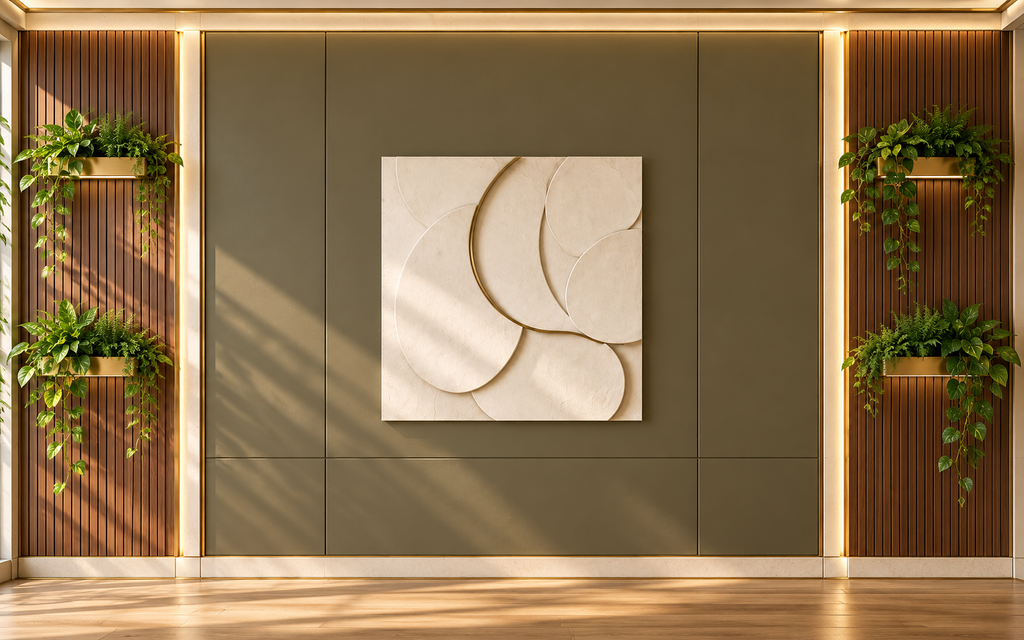
Olive green, walnut and ivory give this wall its depth. The green background is calm enough to support a large artwork, while the wood slats introduce texture. Hanging plants soften the arrangement.
This treatment works behind a desk or on a wall visible during video calls. Use one substantial focal point instead of several small decorations competing for attention.
You can interpret the design without installing custom paneling. Paint, one textured artwork and a limited area of wood detailing can create a similar relationship between color and texture. Test paint beside the actual furniture and fabric samples in both daylight and evening lighting.
Alternative color combinations:
- Olive, walnut and ivory: Warm and closely connected to the reference room.
- Taupe, pale oak and cream: A lighter, softer interpretation.
- Navy, walnut and warm white: A deeper palette with a clear contrast.
- Charcoal, oak and stone: A modern neutral arrangement softened by fabric and foliage.
Shopping idea: Browse HULALA HOME’s sideboards for furniture that supports your chosen palette. Wall treatments and artwork require separate sourcing.
6. Combine Display Shelves With Concealed Storage
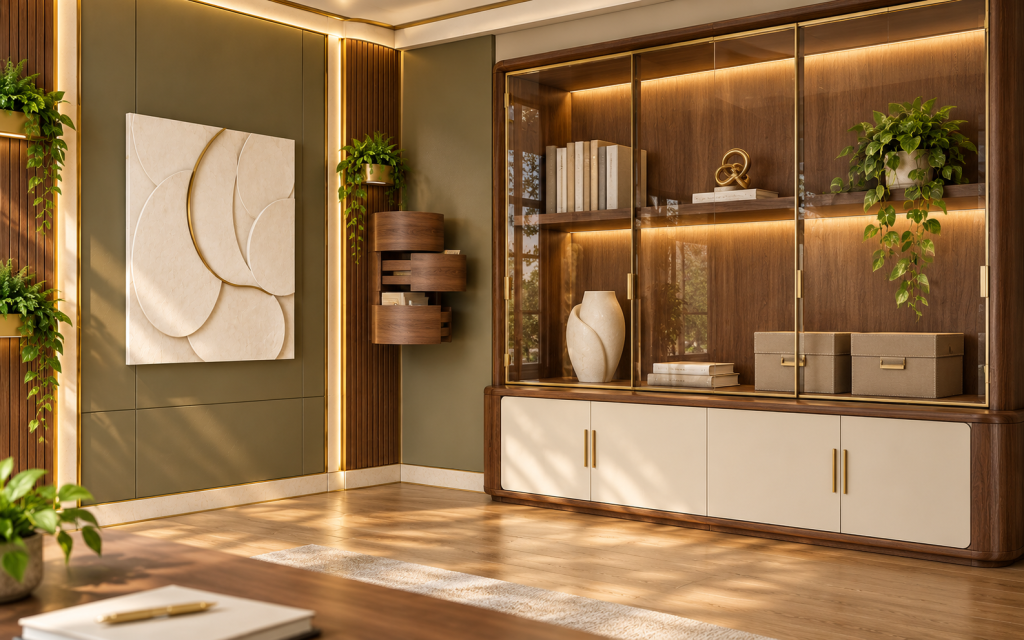
The shelving mixes open walnut compartments with cream cabinets below. Books, ceramics and plants give the upper shelves character, while the closed lower section provides space for less decorative supplies.
Position shelving behind or beside the desk so useful items remain accessible. Keep regularly used materials within easy reach and place heavier objects lower down. Follow the manufacturer’s anchoring instructions for tall furniture.
Style the open shelves in small groups. Try a row of upright books, a horizontal stack and one decorative object, leaving visible gaps between them. Matching boxes can make miscellaneous supplies look more orderly.
Alternative ways to create the look:
- A freestanding bookcase: Useful when you want flexibility without fitted cabinetry.
- Floating shelves above a sideboard: A combination of display and concealed storage.
- Mostly closed cupboards: Better suited to an office with substantial paperwork.
- A compact wall organizer: Helpful when floor space is limited.
Shopping idea: HULALA HOME’s Baggio fluted bookcase offers a ready-made alternative. Check its dimensions and shelf arrangement against your needs.
7. Add a Sideboard for Practical, Attractive Storage
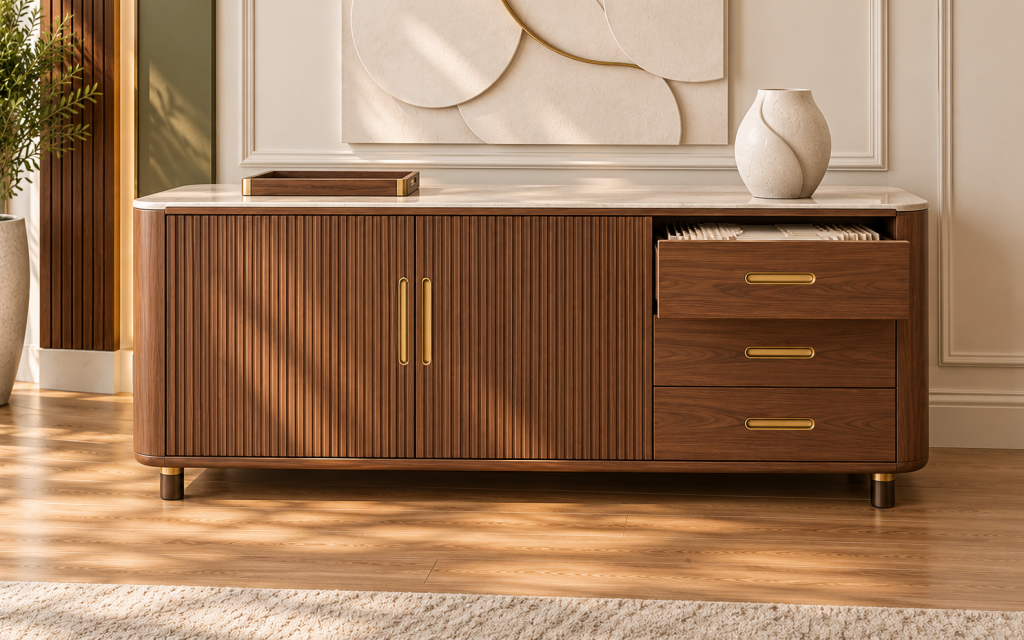
The fluted walnut sideboard carries the desk’s materials into another part of the room. Brass handles provide a decorative detail, while the pale top connects with the cream upholstery and artwork.
A sideboard works well on an unused wall or behind the working chair, provided doors and drawers can open fully. Its combination of compartments can accommodate stationery, documents and storage boxes.
If you want to store equipment inside, check internal measurements, ventilation and access requirements. Keep the top relatively clear so it remains a decorative surface rather than becoming an overflow desk.
Alternative ways to create the look:
- Walnut with brass handles: A warm, textured option.
- Cream with an oak top: A lighter choice for a compact room.
- Flat-front cabinetry: Suitable for a simpler, contemporary office.
- Lockable office storage: Worth considering when secure document storage is necessary.
Shopping idea: Explore HULALA HOME’s sideboard collection. Compare internal shelf heights and storage layout as well as the exterior finish.
8. Keep Cables From Distracting From the Furniture
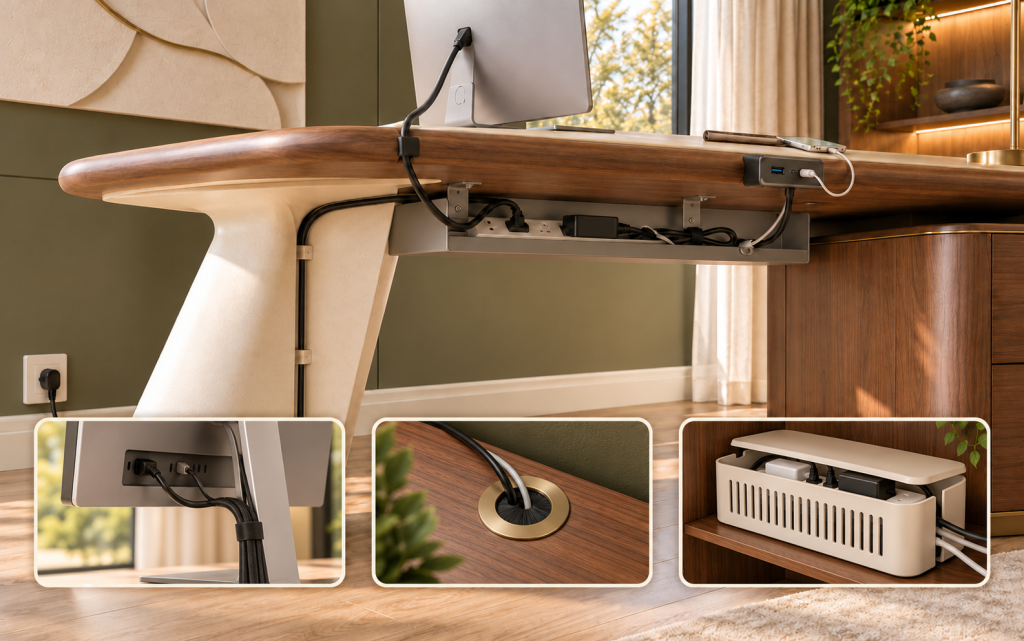
The underside view highlights a detail that can make an office feel much more finished: controlled cable routes. A tray beneath the desk gathers wires away from the floor, allowing the furniture’s shape to remain visible.
Start by identifying where each cable needs to travel. Keep connections accessible and allow enough slack for equipment movement. For an adjustable desk, check the cable route throughout its full range of motion.
Use accessories suited to the desk material and follow installation instructions. Avoid drilling into a desktop without checking its construction, and keep power adapters appropriately ventilated.
Alternative ways to manage cables:
- An under-desk tray: Collects the main cable run beneath the surface.
- Reusable ties and a sleeve: Bundles cords with minimal modification.
- An existing desktop grommet: Provides a clear route through the desk.
- Small cable clips: Keeps charging leads along the rear edge.
Shopping idea: Sunaofe’s Compact Sanctuary system includes monitor-arm cable-routing ideas. The illustrated tray, sleeve and box are separate inspiration details.
9. Finish the Window With Coordinated Curtains
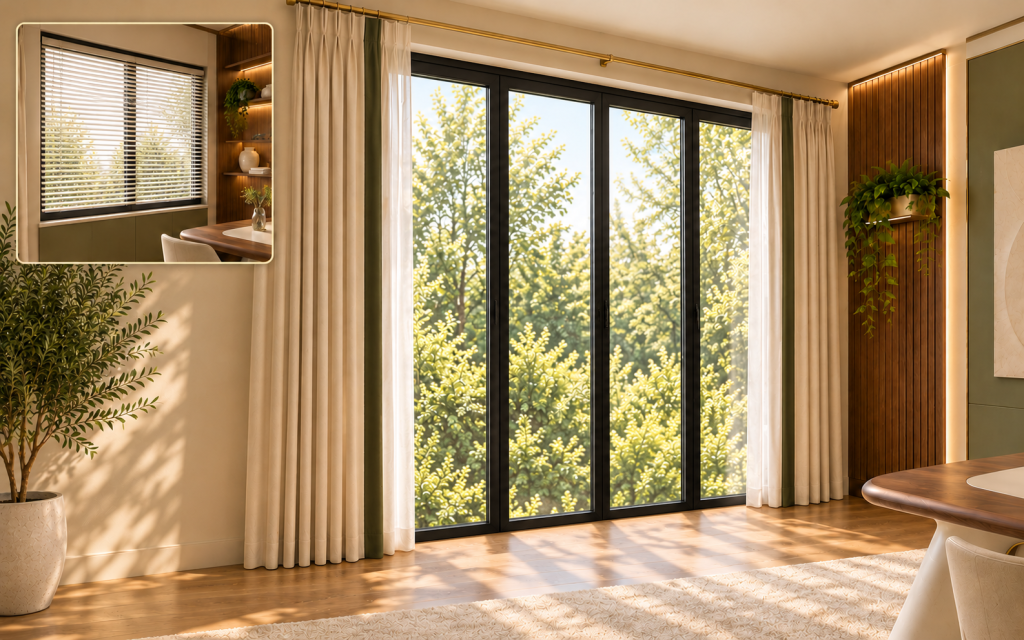
Ivory curtains with olive lower borders connect the window wall to the rest of the office. The fabric softens the black frames, while the warm metallic rod repeats details from the furniture.
Choose window treatments according to light, privacy and the position of your desk. Sheer curtains can soften daylight, but they may not provide enough glare control for your screen.
Where space allows, position curtains so they can clear the glass when open. Choose an intentional finished length and keep fabric away from chair wheels and heating equipment.
Alternative ways to dress the window:
- Bordered curtains: Repeat olive, taupe or another accent color.
- Sheers with lined curtains: Offer different levels of light and privacy.
- A Roman shade: Adds fabric texture without full-length panels.
- A roller blind: A compact option, optionally paired with decorative side curtains.
Shopping idea: Complete the window corner with a coordinating pot from Plant Addicts’ indoor planters. This link is for the accompanying planter; curtains and hardware need a separate source.
10. Introduce One Strong Architectural Feature
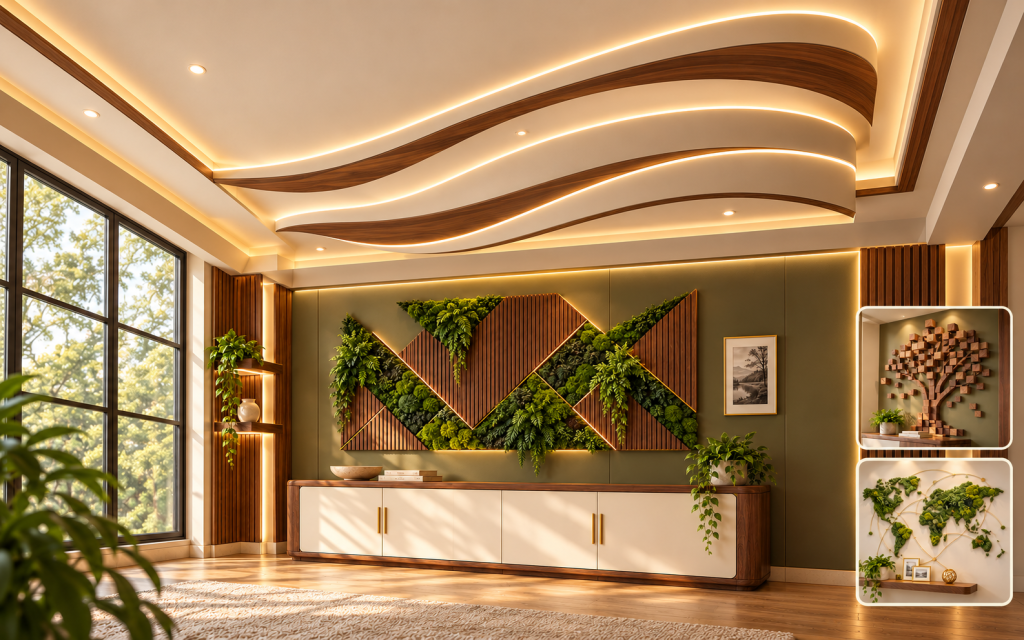
The curved ceiling and geometric greenery wall are the room’s most ambitious decorative features. Their shapes bring movement to the space, while the simple cream cabinet below gives the composition a quieter base.
For most homes, choosing one dominant feature is more practical than recreating every detail. A large artwork above a sideboard can provide a strong focal point without extensive construction.
The image does not establish whether the greenery is living, preserved or artificial. Each requires a different approach. A living installation needs suitable growing conditions and a planned watering system; decorative panels should not be assumed to offer the same function.
Alternative ways to create a statement:
- One large textured artwork: An accessible way to introduce dimension.
- A limited wood-slat panel: Adds architectural texture to a selected area.
- Decorative greenery panels: Consider materials and care requirements before choosing.
- A sculptural pendant: Brings interest overhead while keeping the ceiling simple.
Shopping idea: Browse HULALA HOME’s sideboards for furniture beneath a feature wall. The illustrated ceiling and wall installation are not a ready-made retailer package.
11. Create an Optional Reading and Relaxation Corner
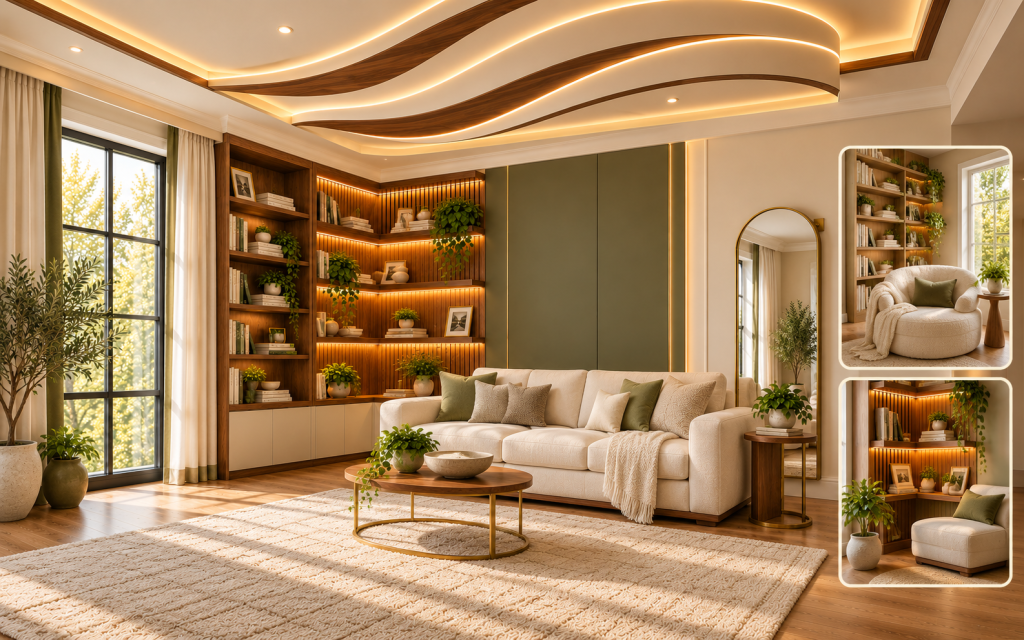
The cream sofa, olive cushions and small round table create a comfortable second zone. An arched mirror adds another shape, while nearby shelving makes the corner useful for reading.
Add this area only after the desk, chair and storage have enough space. Keep a clear route between the entrance and working area. If you choose a recliner or sleeper, measure it in its fully extended position.
A mirror can reflect an attractive part of the room, but position it carefully to avoid directing strong reflections toward your screen. Secure it according to its installation instructions.
Alternative seating options:
- A small sofa or loveseat: Useful for reading and informal conversations.
- A recliner: Suitable where relaxation is the main purpose.
- A rounded accent chair: A compact interpretation of the same soft shapes.
- Convertible seating: Can support occasional guest use when space allows.
Shopping idea: Coddle’s Aura convertible chair sleeper is one multifunctional alternative. Check the closed and open dimensions before ordering.
12. Layer Lighting Throughout the Office
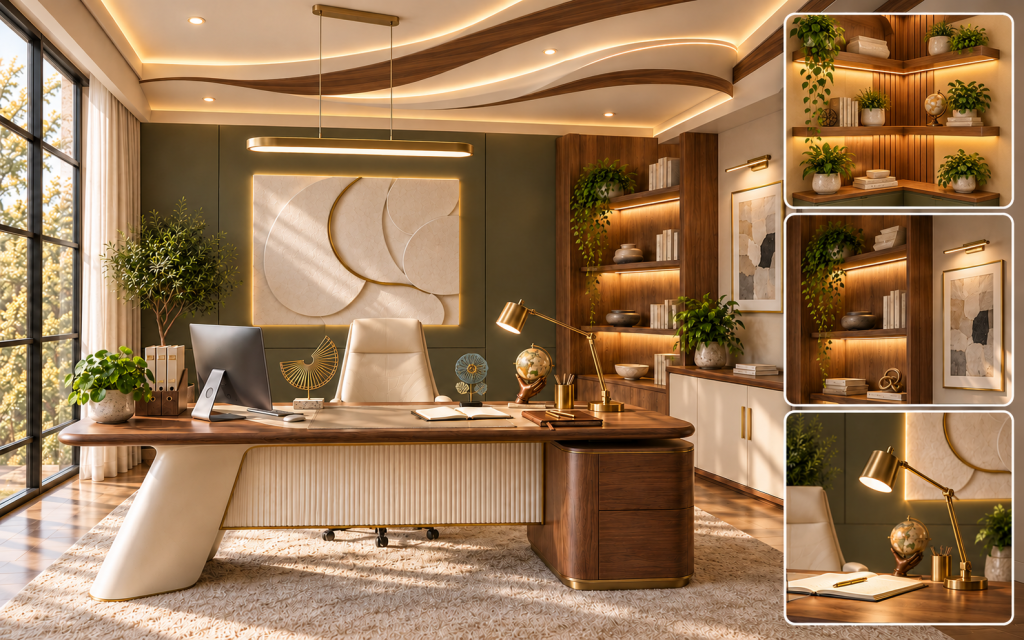
The room uses several kinds of lighting: a pendant above the desk, a focused task lamp, ceiling lighting and illuminated shelves. Each contributes something different.
General lighting helps you move around the room, task lighting supports close work, and decorative lighting highlights materials and objects. Keeping these layers independently controllable makes the space more adaptable.
Position the desk lamp to reduce shadows across your work and avoid reflections on the screen. Check pendant clearance and installation requirements. Fixed wiring and concealed lighting should be planned with a qualified installer.
Alternative lighting combinations:
- Linear pendant and desk lamp: A coordinated choice for a longer desk.
- One sculptural pendant: A strong decorative focal point in a simpler room.
- Floor and table lamps: Useful when new ceiling wiring is impractical.
- Shelf lighting: Adds depth to storage and display areas.
Shopping idea: Consider LightsLux’s brass-and-white alabaster pendant as a different decorative style, or explore Rowabi’s collections. Neither is an exact match to the linear fixture shown.
13. Arrange Plants at Different Heights
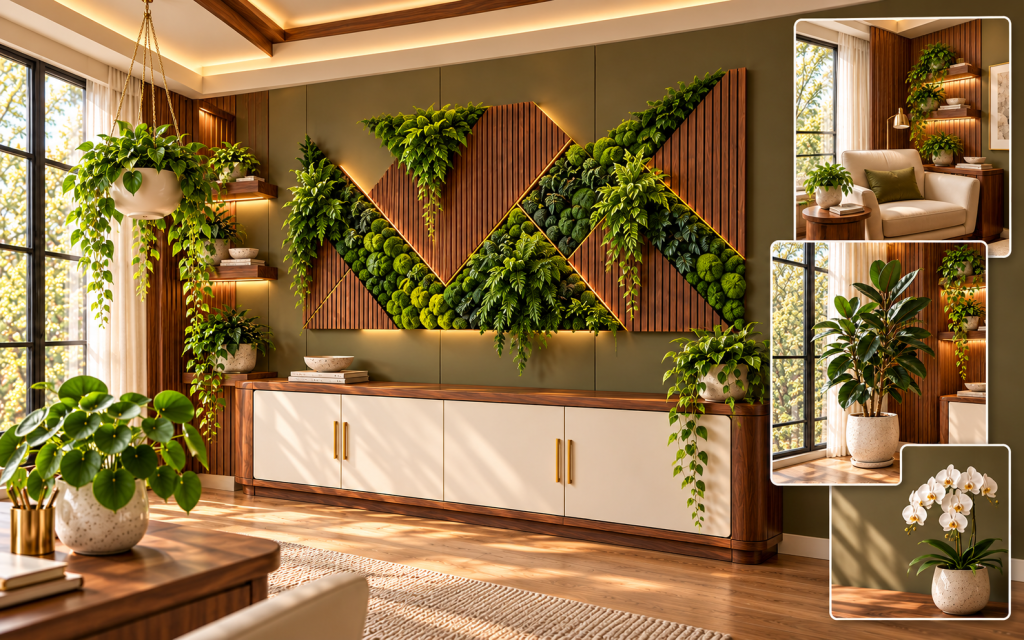
Plants soften the cabinetry and bring variation to the room’s structured lines. Hanging foliage, small tabletop pots and taller greenery create interest at different heights.
Choose plants according to the conditions in your own office. A bright illustration cannot establish whether a particular species will thrive in the real space.
Keep watering and maintenance practical. Protect wood surfaces from moisture, avoid placing watering points over electronics and make sure hanging containers are securely supported. Match the plant’s nursery pot to the planter’s usable opening rather than relying only on external measurements.
Alternative arrangements:
- One tall floor plant: Creates a focal point in an empty corner.
- A small tabletop group: Combines different heights in coordinating pots.
- Trailing foliage: Adds softness to a suitable shelf or hanging container.
- Artificial greenery: An option where conditions or maintenance make living plants impractical.
Shopping idea: Browse Plant Addicts’ houseplants for suitable greenery, then explore indoor money plant / planters. Match plant and planter measurements separately; they are not automatically a compatible set.
14. Give the Office Entrance a Finished Look
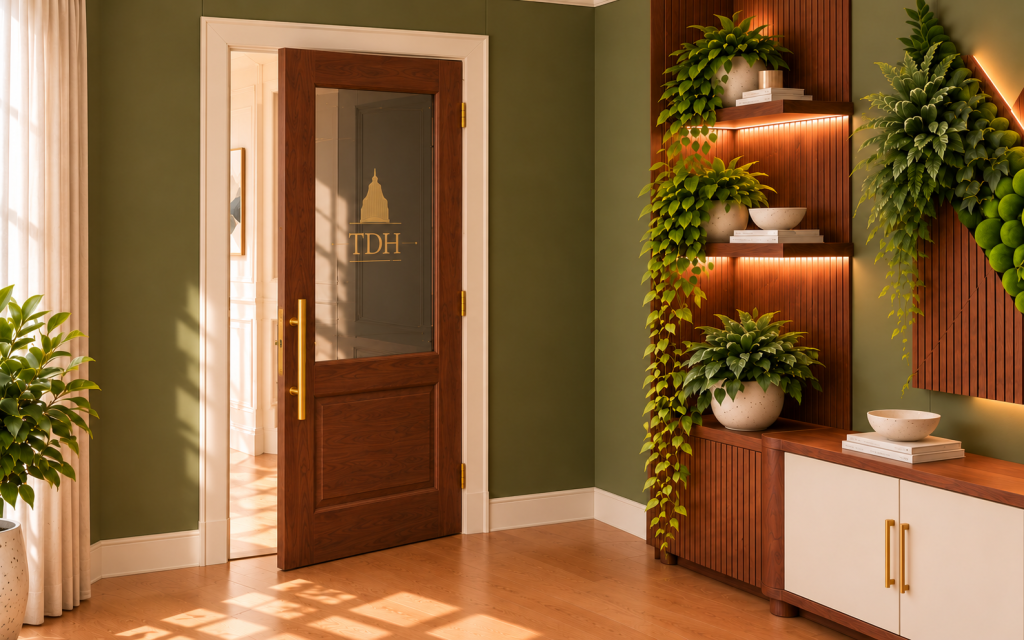
The walnut door introduces the room’s wood finish before you reach the desk. Its glazed panel lightens the appearance, while the brass handle connects with the furniture hardware. Pale trim creates a clear outline against the olive wall.
Consider privacy and light when choosing a door. A glazed design can share daylight, while a solid panel provides a different sense of enclosure. Check the opening direction and keep nearby furniture and plants outside its swing.
An attractive entrance does not always require replacing the door. Coordinated hardware, refreshed paint or a carefully chosen accessory can improve an existing doorway.
Alternative entrance treatments:
- A wood-and-glass door: Useful where shared light is welcome.
- A solid painted door: Cream, olive or taupe can connect it to the room.
- Privacy glazing: Offers another balance between visibility and daylight.
- A hardware refresh: A smaller change using coordinated handles and surrounding decor.
Shopping idea: Add Giftlab’s personalized doormat as a finishing accessory. The pictured door, handle and emblem require separate sourcing.
15. Finish With a Rug and a Separate Welcome Mat
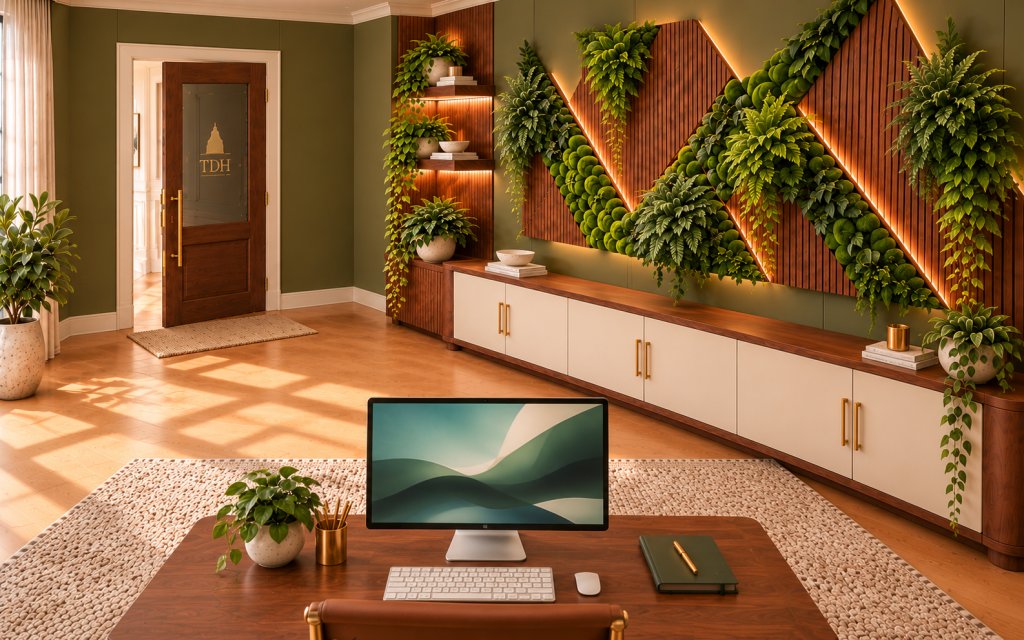
The final view brings the working area and entrance together. A larger neutral rug anchors the office furniture, while the separate doorway mat marks the threshold.
Choose the rug around the movement of your chair, not just the desk’s footprint. Avoid positioning a thick edge where the chair repeatedly crosses it. Check that the construction suits wheeled seating and use appropriate floor protection where required.
At the entrance, select a mat that stays flat and allows the door to open freely. Check its backing and cleaning instructions for compatibility with the flooring.
Alternative floor treatments:
- A cream textured rug: Adds softness without competing with the feature wall.
- An oatmeal patterned rug: Introduces subtle visual interest.
- A low-profile flatweave: Worth considering for a busy work area, after checking chair movement.
- A personalized entrance mat: Adds an individual detail at the doorway.
Shopping idea: Explore Giftlab’s personalized welcome mat. Confirm its size, thickness and intended use. The larger area rug is a separate item.