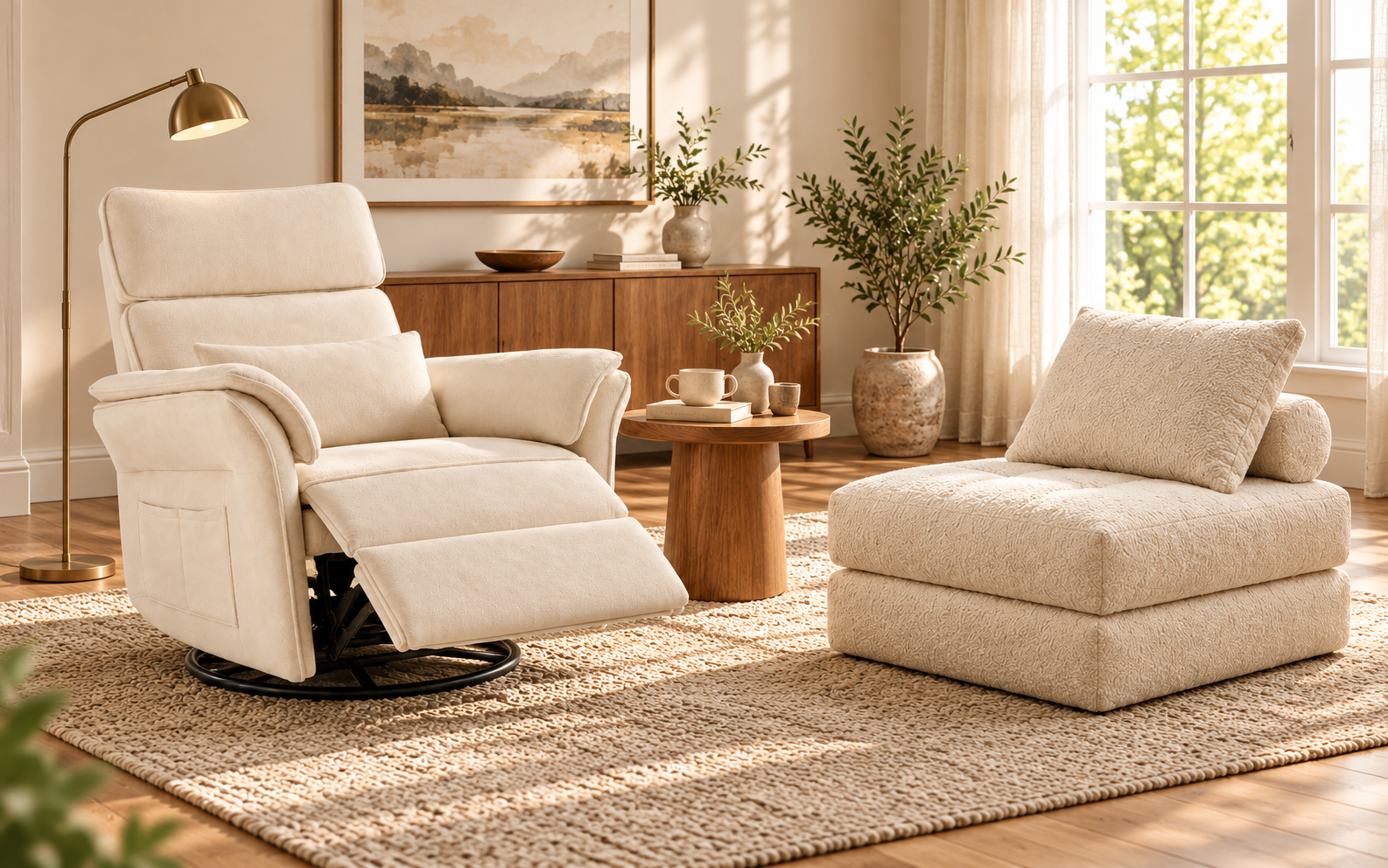
A reading nook does not need its own room. It needs a seat you enjoy using, light that reaches the page and enough space to settle in without moving half the furniture. An unused bedroom corner or a quiet part of the living room can become a welcome pause in the day.
Start with the way you like to sit. Do you prefer an upholstered chair with arms and a reclining position, or a low lounger where you can stretch out close to the floor? These two beige seating options create different kinds of retreat, so the better choice depends on your habits, space and budget.
1. Find a corner you will actually use
Look beyond the empty spot in a room. Consider nearby noise, privacy, daylight and whether the area becomes a route to another room. A seat beside a window may look appealing, but check for glare and the need for curtains during the hours you usually read.
Measure the space in the seating position and in the fully reclined or unfolded position. Keep doors, drawers and walking paths usable. If you are planning a power recliner, identify a suitable outlet before arranging the rest of the corner.
Use a chair you already own to test the location for an evening. Notice where you want to put a cup, whether light falls on the book and if the spot feels too exposed. This trial can reveal more than a photograph of an empty corner.
2. Choose an upholstered recliner for an elevated seat
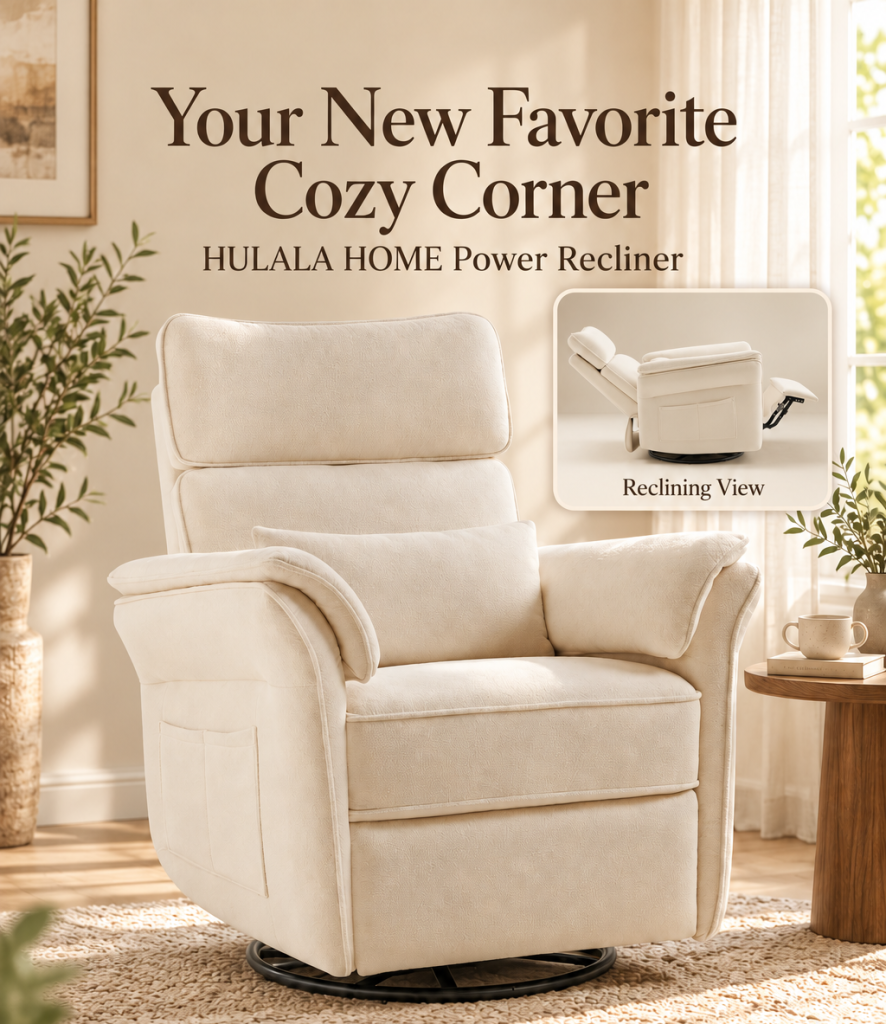
Armrests Nursery Power Recliner for your study corner
The HULALA HOME Cuddle Support Armrests Nursery Power Recliner, shown in Beige, is listed at $669.99. Although its product name refers to a nursery, its neutral upholstered appearance also lends itself to a reading-corner scheme.
Style it with a small wood side table and a lamp placed to illuminate the page. Keep decorative cushions modest so they do not occupy the space you need to sit. A throw over the back or nearby in a basket can add texture without covering the chair’s shape.
Check the recliner’s full movement range and recommended clearance with the retailer. The supplied reference diagram shows a much longer footprint when reclined than when upright. Compare seat height and dimensions with a chair you find easy to use; the label “recliner” alone does not tell you whether its proportions suit you.
View the HULALA HOME Beige Power Recliner and more products
3. Choose a fold-out lounger for a relaxed, low setting
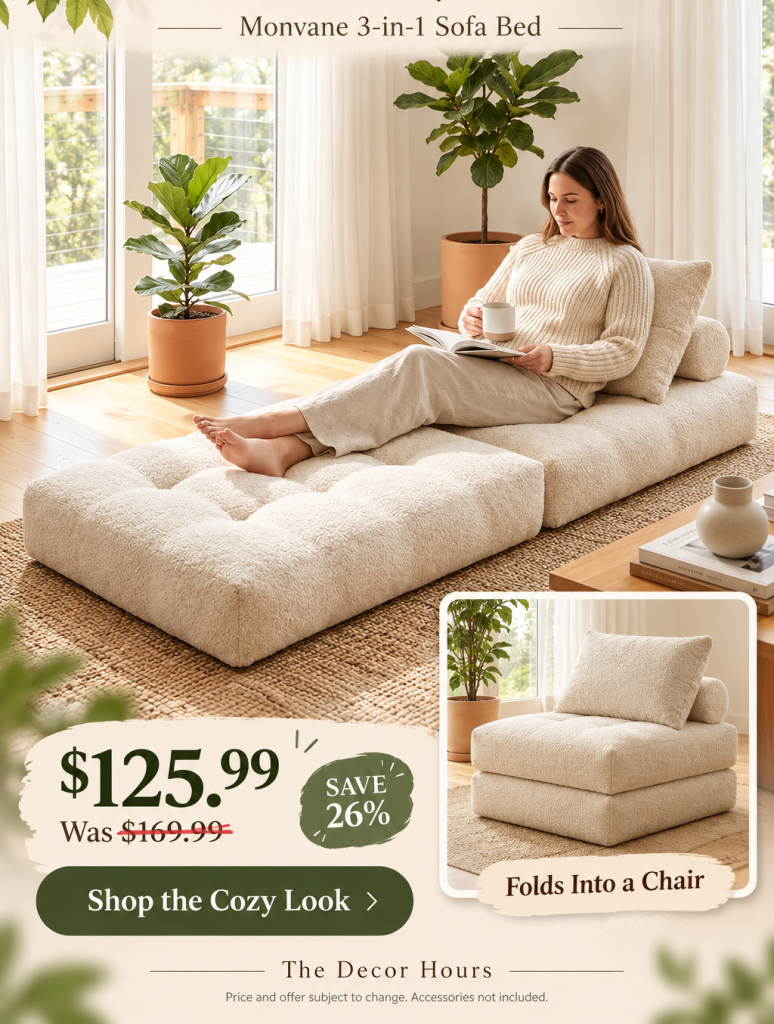
The Monvane Oversized Sofa Bed, shown in Beige Teddy Velvet, is listed at $125.99, reduced from $169.99, with an advertised 26% saving. It offers a different kind of seating: a low folding design for sitting and stretching out, with a sleeper configuration marketed for occasional overnight use.
A rug, a nearby low table and softly filtered daylight suit its casual appearance. Keep space in front available so opening the lounger does not require moving a heavy coffee table. The low seating position is a key part of this choice; it may be less convenient if getting down to or up from floor-level furniture is difficult for you.
Monvane says the product arrives compressed and needs time to expand. Follow the included setup directions, and confirm the unfolded measurements before planning its position or buying bedding.
View the Monvane Oversized Sofa Bed and more products
4. Use lighting that works after sunset
Daylight makes a corner feel inviting, but your nook also needs to function in the evening. Place a reading light where it illuminates the page without shining directly into your eyes. Test the position while sitting in the way you normally read, including the reclined position if relevant.
A floor lamp saves table space, while a table lamp can suit a larger side surface. Keep cords away from the walking path and the furniture’s moving sections. Adjust the room’s general lighting as well; a bright page in an otherwise completely dark room may not feel relaxing.
5. Layer texture without filling the corner
Beige seating works with warm wood, muted green, terracotta or soft brown. Choose one accent and repeat it sparingly. For example, a patterned cushion, a ceramic cup and a small artwork can create a connected look without making the nook busy.
Use a rug to define the area if it fits the chair’s operation and the surrounding room. Check that edges lie flat and do not interfere with reclining or unfolding. A small stack of books adds personality, but keep the surface where you set down a drink clear enough to use.
If you add greenery, choose a plant according to the actual light in the corner. A bright photograph does not establish that a plant will thrive in the same place throughout the year.
Frequently asked questions
Can I create a reading nook in a bedroom?
Yes, provided the seating does not obstruct wardrobes, drawers or the route around the bed. Keep the chair area visually connected to the bedroom through colour and texture rather than adding a completely separate theme.
Which option is better for a tight corner?
Compare the open dimensions, not just the upright appearance. A compact-looking fold-out can occupy substantial floor space when extended, and a recliner needs room for movement. Tape out both positions before choosing.
Do I need a new rug and lamp as well?
Not necessarily. Test the lighting and accessories you already own. Spend first on the part of the corner that is missing or uncomfortable, then add decoration gradually.
Make the nook part of your routine
The most useful reading corner is one you can settle into without preparing it every time. Keep a book within reach, give your cup a stable surface and leave the seat ready to use. A few practical choices can make even an ordinary corner feel personal and inviting.
Which seating style suits your nook?
| Consideration | HULALA power recliner | Monvane fold-out lounger |
|---|---|---|
| Listed price | $669.99 | $125.99 sale; previously $169.99 |
| Sitting style | Upholstered chair with arms and reclining function | Low folding seat for stretching out |
| Space to check | Full reclined movement and outlet access | Entire unfolded floor area |
| Most useful comparison | Seat height and fit versus a chair you already like | Comfort with getting into and out of low seating |
| Styling approach | Side table, reading lamp and restrained textiles | Rug, low table and relaxed layers |